Rate Hikes Are Back on the Table. Your Savings Are on the Menu.
AI Is Eating the Power Grid. I Found the Plays.

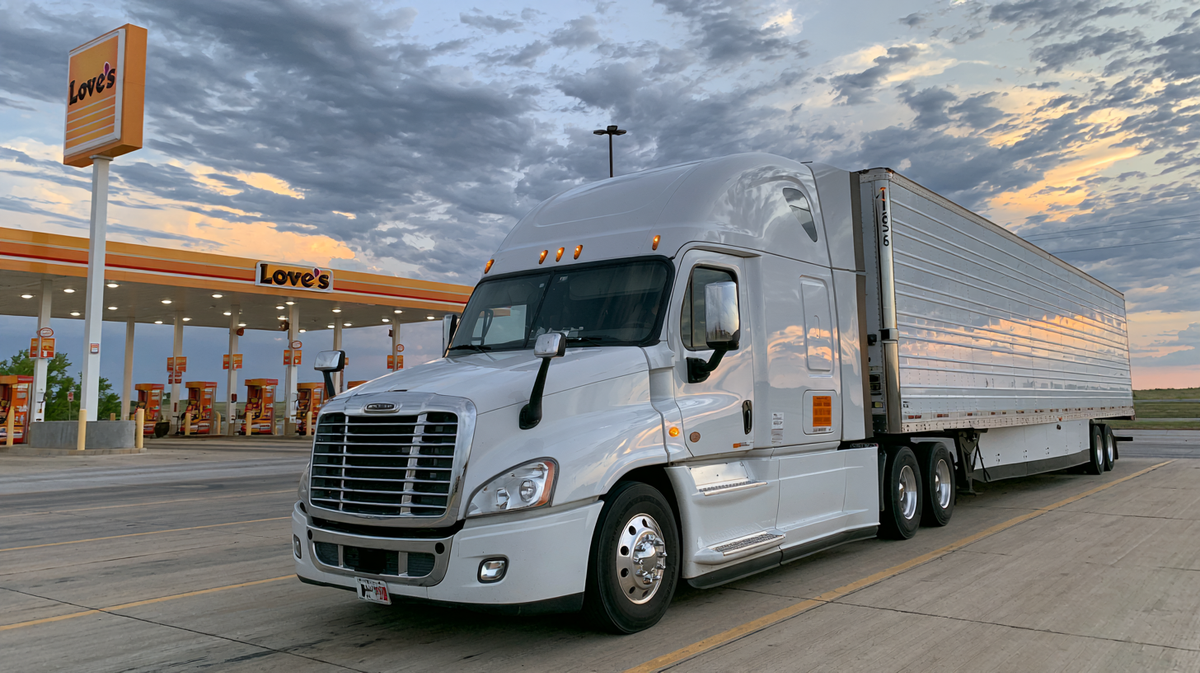
🗺️ Current Dispatch: I-44 Eastbound, Rogers County, Oklahoma — parked at a Love’s Travel Stop between Claremore and Vinita
⛽ Local Diesel: $4.12/gal
☕ Diner Coffee Index: $4.35 — tastes like it was brewed over old locomotive coals and the mug is suspiciously sticky on the outside, but the guy behind the counter gave me a silent nod and stuffed a handful of road mints into my pocket.
⏳ Days in trip: 8
I pulled off the highway because I saw something wild. Three brand-new power substations in forty miles of Oklahoma road. Not old ones getting patched. New steel. New transformers. Fresh concrete pads still curing in the July heat. Someone upstream signed a very big check.
I’ve driven this stretch of I-44 maybe thirty times. Never once saw utility crews stacked three-deep at a substation site on a Wednesday. Something big is shifting in the bones of this country. If you’re watching CNBC from your couch, you’re getting the clean version about six months too late.
Let me tell you what the windshield showed me — and what it means for your money.
The Driver’s Scene: Where the Concrete Meets the Capex
I got out at the second site. It sat just south of the Will Rogers Turnpike junction. Hard hat zone. A foreman named Dale — mid-fifties, sun-cooked, Carhartt vest over a soaked t-shirt — was running a crew. They were bolting down transformer housings the size of shipping containers.
I asked him who was paying for all this.
“Data center people,” he said, not looking up. “They’re building two sites east of Tulsa. Big ones. We’re running direct feeds.”
Two sites. Direct power feeds. In Rogers County, Oklahoma.
This isn’t San Jose. This isn’t Northern Virginia. This is cattle country getting rewired for AI.
The numbers back up what Dale’s crew is building. ClearBridge’s latest outlook says tech capex for new data centers should hit $6.78 trillion by 2030. Global data center power demand is growing at 22% per year through the end of the decade. The IEA says data centers will drive nearly half of U.S. power demand growth through 2030.
Franklin Templeton puts it even more bluntly. AI now eats about 4.5% of total U.S. power output. That equals roughly 20 million homes. Or all of Spain. By 2035, AI may use 5% of all energy on Earth.
That’s not a trend. That’s a full rewiring of the American grid. And it’s happening in places like Rogers County before it hits a single Bloomberg screen.
Morgan Stanley sees a $1.5 trillion funding gap in the global data center buildout from 2025 to 2028. Credit markets — corporate debt, asset-backed deals, CMBS — are racing to fill it. Global clean energy spending hit a record $2.3 trillion in 2025, up 8% from last year. Power grids alone pulled in just under $500 billion.
The big build isn’t coming. I’m parked on top of it.
The Macro Extraction: A Hawkish Fed, Sticky Inflation, and Gold’s Pullback
Now here’s where the substations link to your portfolio.
The Fed held rates at 3.50%–3.75% in June. But the minutes read like a warning shot. Nine officials want at least one rate hike this year. Six of those nine penciled in two hikes. A few pushed to raise rates at the June meeting itself. Chair Kevin Warsh’s press talk was flat-out hawkish.
May headline inflation came in at 4.1%. Core at 3.4%. Both well above the Fed’s 2% target. Here’s the part that matters for you: the minutes named AI twenty-one times — up from eight in April. The tone was hawkish. The Fed now sees AI-driven demand as a force that pushes prices higher. Those same substations Dale is bolting down? The Fed views them as fuel for inflation.
Reuters called the minutes “an even split” between holders and hikers. JP Morgan’s top U.S. economist called them “milquetoast.” But the dot plot tells the real story. The rate-cut camp is gone. Hikes are the live option now.
Meanwhile, gold fell to $4,154/oz last week. It shed over $200 in a sharp but orderly drop. Three things drove it. First, the Fed’s hawkish turn. Second, softer demand from China, where premiums eased. Third, a cooling of the risk premium after the U.S.-Iran deal eased Strait of Hormuz fears.
But here’s what the panic crowd won’t tell you: gold is still above $4,000 after the drop. Central banks added over 1,000 metric tons to reserves in 2024. That’s three straight years above that mark. The World Gold Council’s 2025 survey found 43% of central banks plan to add more gold. That’s up from 29% the year before. Goldman Sachs still targets $4,900/oz by December 2026.
A $200 dip in a long-term bull market driven by sovereign buying is not a crisis. It’s a buying window.
Big Oil Just Bet Big on Lithium
Eni, Italy’s largest oil producer, just signed a strategic agreement to invest into EnergyX’s lithium project in Chile, a stake that could reach $225M. The project is expected to generate $1.3B in annual revenue at forecasted market prices.
It’s just one piece of EnergyX’s portfolio holding up to 15M+ tons of untapped lithium, and it’s the latest proof of EnergyX’s progress. Until July 16, you can invest as an early-stage shareholder and share in that growth.
Natural resources weren’t the only draw. EnergyX’s patented tech recovers up to 3X more lithium than traditional methods at 500X the speed, paving the way to commercial-scale production.
Lithium demand is projected to grow 5X by 2040, so the timing couldn’t be better. General Motors and POSCO are already EnergyX shareholders.
Now it’s your turn. Become an early-stage EnergyX shareholder before the July 16 deadline.
Disclaimer: Energy Exploration Technologies, Inc. (“EnergyX”) has engaged Dynamic Industries to publish this communication in connection with EnergyX’s ongoing Regulation A offering. Dynamic Industries has been paid in cash and may receive additional compensation. Dynamic Industries and/or its affiliates do not currently hold securities of EnergyX. This compensation and any current or future ownership interest could create a conflict of interest. Please consider this disclosure alongside EnergyX’s offering materials. EnergyX’s Regulation A offering has been qualified by the SEC. Offers and sales may be made only by means of the qualified offering circular. Before investing, carefully review the offering circular, including the risk factors. The offering circular is available at invest.energyx.com. Comparisons to other companies are for informational purposes only and should not imply similar results.
(ad)
The Laptop Execution & The Roadside Detour
The Laptop Execution:
Here’s what I’m doing from the Love’s parking lot Wi-Fi. You can do the same from your campground or kitchen table.
Infrastructure utilities are the cleanest play on what I saw this week. These are core service assets with long-term contracts and steady earnings. They hold up even when the macro picture turns ugly. ClearBridge calls their values “attractive” given the length of their spending cycles. I agree. Look at regulated electric and gas names with direct data center ties. These aren’t bets — they’re the picks and shovels of the AI buildout.
Physical gold on the dip. Gold at $4,154 with central banks still buying at record pace and inflation at 4.1% is not a sell signal. It’s a reload. I’m adding to physical, non-custodial holdings right now. Not paper. Physical. The big-picture case hasn’t changed: dollar hedging, sovereign buying, sticky above-target inflation. The price just got cheaper.
Freight and logistics — watch but don’t chase. The freight slump is real. Breakthrough Fuel expects demand growth of just 0.5% over the next twelve months. But supply-side squeezes are building. New CDL rules are tightening driver supply. There are 25% tariffs on heavy-duty truck imports. Cost pressure is forcing carriers to exit. C.H. Robinson sees cost-per-mile rising +2% year-over-year for both dry van and reefer in 2026. A market turn in late 2026 is possible. I’m building a watchlist of asset-light logistics firms set to gain from rate shifts without carrying fleet risk.
Trail stops stay tight. I’m not swinging for fences with a hawkish Fed and inflation at 4.1%. Protect capital first. Grow it second.
The Roadside Detour:
One last thing before I pull back onto I-44. Twelve miles east of here, just outside Vinita, Oklahoma, sits the world’s largest McDonald’s. It’s a 29,135-square-foot glass-and-steel arch that spans the Will Rogers Turnpike. Built in 1957 as a toll plaza diner. Torn down and rebuilt in 2022 as a gleaming shrine to American roadside commerce. It straddles both lanes. You can eat a Big Mac while semis rumble under your feet in both directions.
I bring this up because it’s the perfect image for where we are right now. The old building — the ‘57 original — got ripped out. Something bigger, shinier, and pricier took its place. The highway under it never stopped moving.
That’s the American grid today. The substations are going up. The data centers are coming. The power demand is real. The old bones are getting torn out and rebuilt in real time. Most people just blow past it at 75 without looking up.
Don’t be most people.
— Brook
The Bare Economy. From the road. For the road.
The institutional “Paper Trail” is public
While headlines focus on China and Iran… the smart money is moving.
Recent 13F filings show that institutional giants like BlackRock and Morgan Stanley have already started accumulating shares.
They are moving into one small company tied to a newly confirmed U.S. resource discovery.
This isn't speculation—it is a matter of public record.
After 20 years of mapping, the U.S. Extended Continental Shelf Task Force just confirmed access to massive undersea minerals.
These are the same metals—Nickel, Cobalt, and Manganese—that China currently controls.
Most retail investors haven't looked at the federal filings yet.
That's why this asset is still significantly mispriced.
Get the ticker before the institutional "accumulation phase" ends.
See the filings and the ticker symbol here >>
(In partnership with Behind the Markets)