Vegas Is Eating the Desert Alive — I Watched It From a Truck Stop on Boulder Highway
North Las Vegas just opened 4,262 acres to developers. I drove the perimeter.

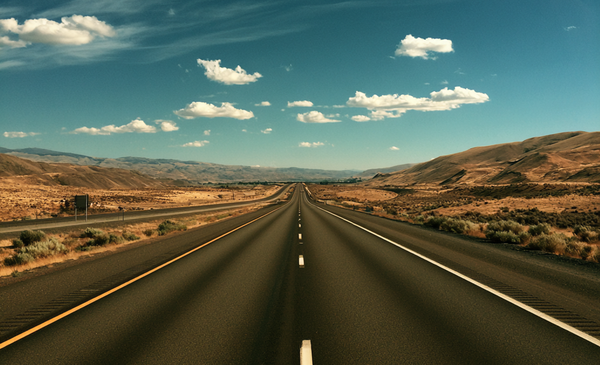
🗺️ Current Dispatch: Boulder Highway south, Henderson, NV — parked at a truck stop between a dead pawn shop and a new electric shuttle charger that wasn't here six months ago.
⛽ Local Diesel: $4.13/gal
☕ RV-Stove Coffee: $3.85 — burnt, fine, served in a mug that's lived through more boom-bust cycles than most hedge funds.
⏳ Days in trip: 18
I'm watching a concrete pump truck swing its boom over what used to be a vacant lot the size of a Walmart. Three weeks ago this was hard dirt and creosote bush. Now there's rebar grids and a porta-john city. A guy in a hard hat told me they're pouring slabs for 200 homes. He didn't know the builder's name. He knew his overtime rate.
That's the story out here. Not on CNBC. Not in a Morgan Stanley deck. It's in the overtime rate of a concrete guy on Boulder Highway who can't keep up with the pour schedule.
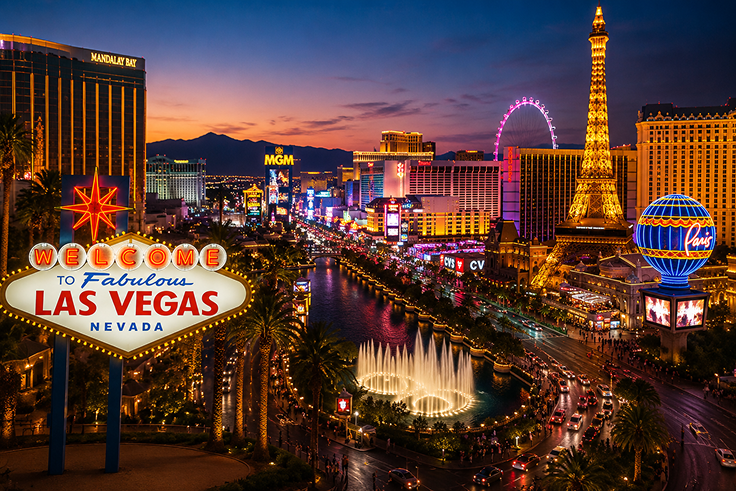
Vegas added over 150,000 people since 2020. The metro sits at roughly 2.3 million across Clark County. The Census Bureau says it could push toward 2.5 million by 2030. The city proper just cracked 651,000. Henderson alone tops 317,000 — Nevada's second-largest city. Most folks outside the Mountain West couldn't find it on a map.
But here's the part that makes this dispatch different from every "Vegas is booming!" headline you've scrolled past: the water math works. And if you get why, you know where to park capital for the next decade.
The Driver’s Scene & The Macro Extraction: Scarcity as a Weapon
I drove north this morning through North Las Vegas. Past the 215 beltway where Lamb Boulevard dead-ends into raw federal desert. There's a BLM sign out there, sun-bleached. It says "U.S. Government Land — Keep Out." Behind it, 4,262 acres of buildable dirt just got listed. North Las Vegas put out two Request for Info packets for the Tule Springs East Area.
Read that number again. 4,262 acres. That's not an infill lot. That's a small city waiting to be stamped onto Bureau of Land Management land.
The smaller piece — 155 acres at CC-215 and North Lamb — is tagged for flex space, logistics, and warehouses. The bigger piece — 4,107 acres — is the real swing. North Las Vegas wants a "new, complete community." Homes, shops, jobs. Bids are due August 17th. They pick a winner September 16th.
Meanwhile, downtown, the City of Las Vegas just dropped an RFP for about 11 acres near the Fremont Street Experience. Mayor Shelley Berkley called it "a once-in-a-lifetime chance." They want hotels, sports venues, homes, offices, green space. Less than a mile north, over 1,000 new homes are planned on the old Cashman Field and Grant Sawyer sites. Deadline: December 16th.
And in the Arts District, the city sought a builder for a 1.23-acre site. The rules: at least 100 cheap artist live-work units. At least 75% of rents pegged at 80% or below area median income. Ground-floor shops. Galleries. Supply stores. That window closed in March.
Here's the macro pull, Bob & Carol: This is not froth. City halls are turning federal desert and dead downtown lots into shovel-ready build sites. Sun Belt mega-projects are breaking ground through high rates. Builders are betting billions on multi-year plans that deliver in 2027–2029. They're wagering that people keep moving here faster than the cost of money rises. Fort Worth and Jacksonville show the same pattern. The format is big mixed-use districts with a grocery store at the core.
But Vegas has something Fort Worth doesn't: water grit.
Nevada got the smallest Colorado River share in the 1922 Compact — just 300,000 acre-feet per year. Arizona got 2.8 million. California got 4.4 million. That tiny slice forced the Southern Nevada Water Authority to become the best water shop in America. They recycle 99% of all indoor water through the Las Vegas Wash back into Lake Mead. They earn one-to-one return credits. Indoor water is nearly free against their share because it comes home. Per-person water use dropped 58% between 2002 and 2025 — even as the region added roughly 876,000 people. In 2024, Nevada used just 212,400 acre-feet of its 300,000. That's called decoupling. Almost no other city on the river pulled it off.
Phoenix? A 2023 study showed a 4.86 million acre-foot gap in the Phoenix water basin. Governor Hobbs froze new subdivisions that relied on groundwater. NASA's GRACE satellite found the basin lost 27.8 million acre-feet of groundwater between 2002 and 2024 — an entire Lake Mead, gone.
Vegas survived because scarcity was the teacher. The kid picked last learned to fight hardest.
The Laptop Execution: Positioning for the Desert Build-Out
So what do you do with this? You’re parked at a KOA outside Primm, or you’re in your living room in Tulsa. You’re watching the same big money pour into desert builds that I’m seeing through a cracked windshield. Here’s how I’m thinking about it:
The Migration Play. Over $2 billion is going into transit across the Vegas metro — light rail, electric shuttles, transit-linked housing. The Regional Transit Commission is wiring up the suburban nodes (Summerlin, Henderson, North Las Vegas) to the job centers. Green building codes cover 60% of new builds. This isn’t casino money anymore. This is infrastructure capital — the kind that flows into utilities, building supplies, water tech, and power grid upgrades.
Tickers I’m watching from the cab: Water treatment plays gain directly as the SNWA model gets copied by other thirsty Sun Belt metros. Cement and gravel makers ride the 25,000+ new housing units in the pipeline. And the data center fight — Boulder City just voted to appeal a federal okay that let a Texas hedge fund flip a solar farm permit into a data center on BLM land, skipping public review under a Trump-era order — tells you the power-grid-to-AI-compute clash is live and hot in this exact spot.
Boulder City is weighing a freeze on new digital builds. A public vote hits in November — locals deciding if server farms count as okay land use in Eldorado Valley. The water-versus-compute tension is real: the region bans steam cooling, but data centers need huge power loads for other cooling methods.
The asset shield logic stays the same. When 4,262 acres of federal land gets flipped to private builds in a metro adding 150,000 people in five years — and the water math is sound — you’re looking at a long, slow land value climb. Physical gold stays your ballast against the price creep that this kind of demand creates. Because 25,000 new homes don’t make housing cheaper. They make the inputs cost more. Lumber. Copper. Concrete. Labor.
Trail your stops. Don’t chase. The Sun Belt migration bet has a long fuse. These projects land in 2027–2029. Builders are paying high rates because they believe the demand curve holds. Your job isn’t to front-run the pour schedule. It’s to own the stuff the pour schedule needs.
The clock is ticking on the biggest energy deadline in American history…
Aims its full firepower at ONE company.
See, on August 18th, the government holds a landmark land auction for this energy source - and the results could reshape the entire sector.
But here’s what almost nobody knows:
When the White House killed credits for solar, wind, EVs, and every other renewable energy source in America…
They left one untouched.
Not only that - they reclassified it alongside oil and nuclear…
And gave it eight years of credits.
Because last June, a drilling crew working right near the Grand Canyon…
Unearthed a well of clean energy producing almost 8 times the output of the largest oil well in Saudi Arabia…
Capable of powering civilization for two million years.
Right here on American soil.
Everything changed that day.
Google signed a 15-year contract…
Bill Gates wrote a $100 million check.
And on August 18th, the government hands this energy source its biggest advantage ever.
One company owns the entire chain.
The window to be an “early investor” is closing fast.
I recommend placing your trade at tomorrow’s market open.
Go here now for the Grand Canyon breakthrough ticker>>
(ad)
The Roadside Detour: The Kid Who Got Picked Last
Before I pull out of this truck stop and head toward the Tule Springs fossil beds — yes, there are real Ice Age mammoth bones under those 4,107 acres North Las Vegas wants to turn into a "complete community" — let me leave you with the weird bit of history that makes this whole dispatch click.
In 1922, seven states sat down to carve up the Colorado River. Nevada sent one guy. The state had fewer than 80,000 people. Vegas was a railroad water stop with a few hundred folks and a rep for being too hot to matter. They got 300,000 acre-feet — the smallest share — because nobody thought the desert would ever need more.
A hundred years later, that insult became a game plan. The tiny share forced a discipline that plenty never could. While Arizona pumped groundwater like it was endless and California sued its way to the biggest straw in the river, Nevada built the best water recycling system in the Western Hemisphere.
There's a lesson in there that goes way past water, Bob & Carol. The limit is the edge. The small share *s the moat. Whether you're running a water district or a nest egg from a campground in Pahrump, the math is the same: the people who make it aren't the ones who got the most. They're the ones who learned to waste the least.
I'm fueling up. Diesel's $4.13. Coffee was bad. The desert is building.
Stay liquid. Stay moving.
— Brook
The Bare Economy. From the road. For the road.
Retire on AI? This May Be Your Last Shot.
Nvidia made history—surging to a $5 trillion valuation, becoming one of the most powerful companies on Earth.
And while most investors missed out…
Those who bought early were rewarded with life-changing wealth.
But now, something new is brewing.
📈 BlackRock just invested $225 billion into the next wave of AI
📈 Warren Buffett plunked down $40 billion
📈 And one $20 stock could be at the center of it all
This isn’t a chipmaker. It’s something different.
And it may become the last retirement stock you’ll ever need.
Before the media catches on, you still have time to act.
Click here to get the name and ticker now
(In partnership with Behind the Markets)